Key Contributions
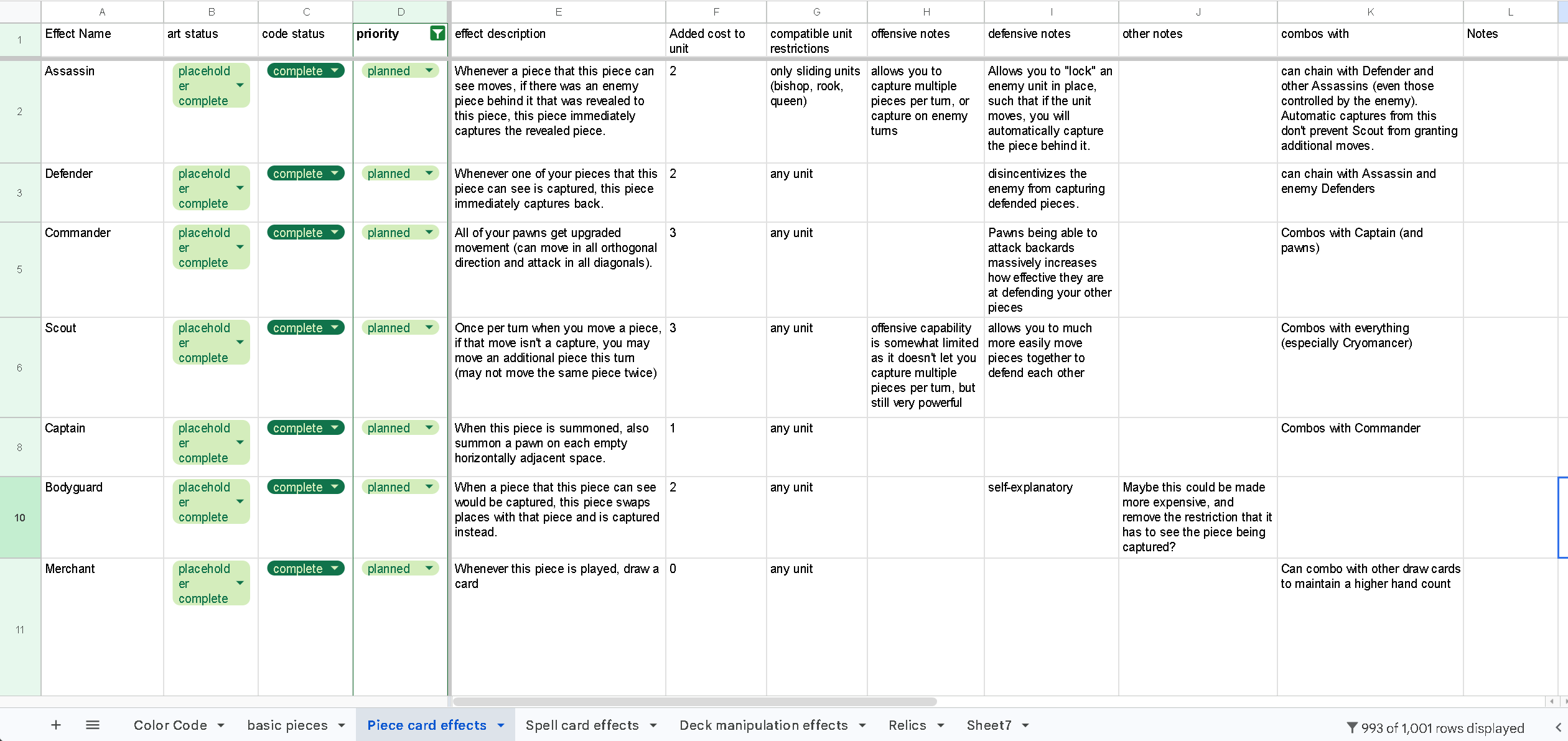
During this game's development, I was one of the 4 designers who assisted in the creation of the core gameplay systems. Features were initially documented in Excel before being implemented into the game and further iterated from there.
Early Development
Early into development, features were expirimented within TableTop Simulator to simulate gameplay while the engine was in development.
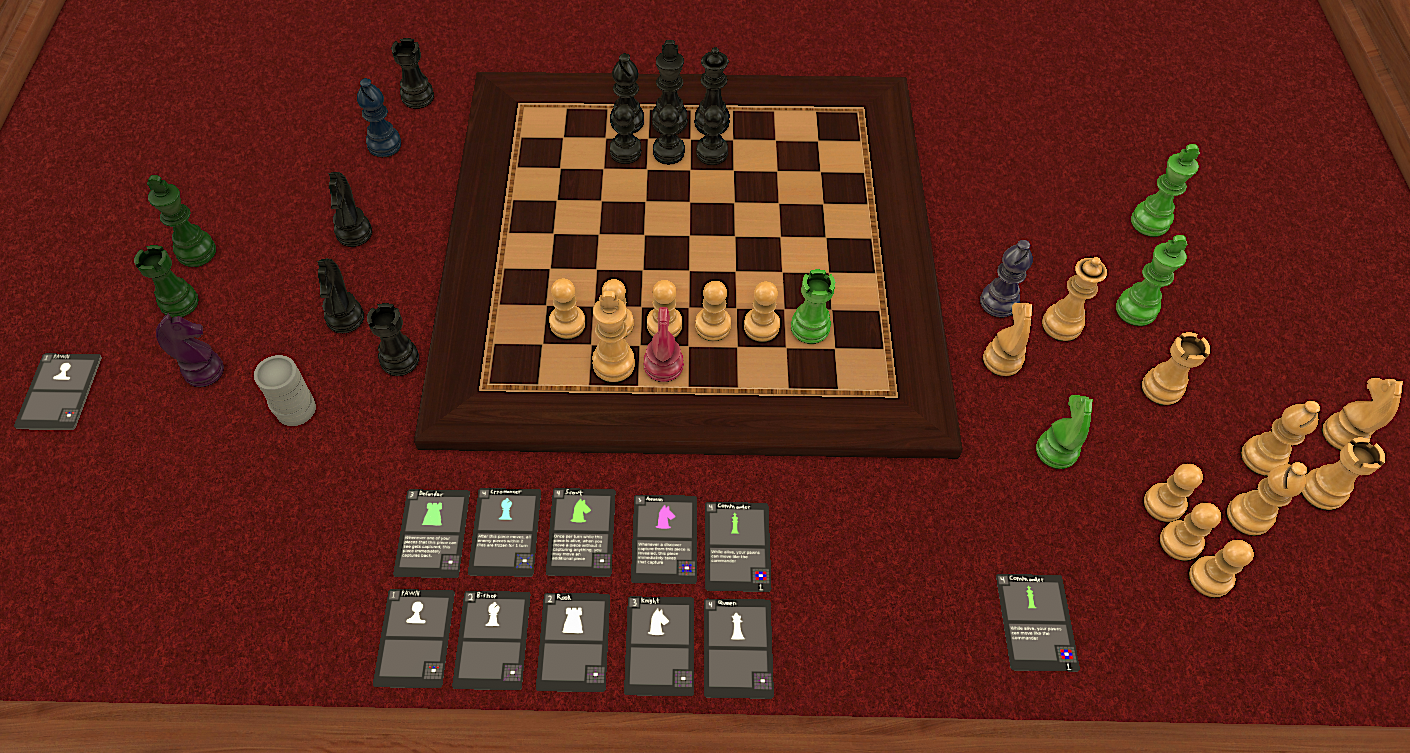
Once the engine was functional, we organized the mechanics based on time needed to create and the popularity of the idea in the team.
The Excel Sheet was also used later in development to track the completion progress of mechanics.
The cost of Units, Enchantments, and Spells were balanced around:
- Mechanical complexity
- Disruption to combat pacing
- General versatility
Balancing Iterations
After they were created, I was able to iterate on the exact values through continuous testing. Playtesting also happened every few weeks to ensure the mechanics were balanced and easy to understand.
The Reward System
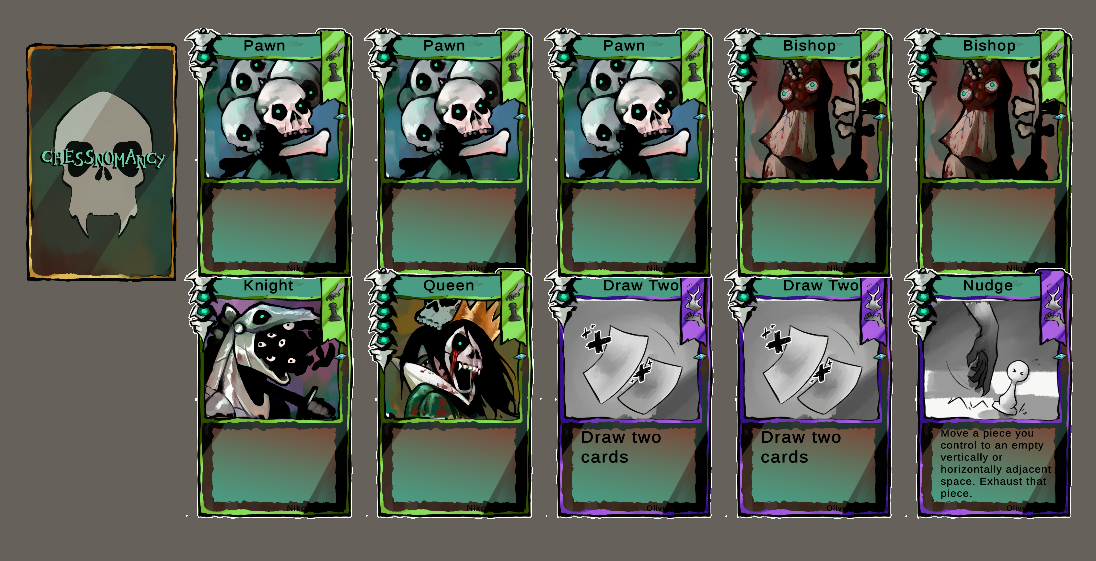
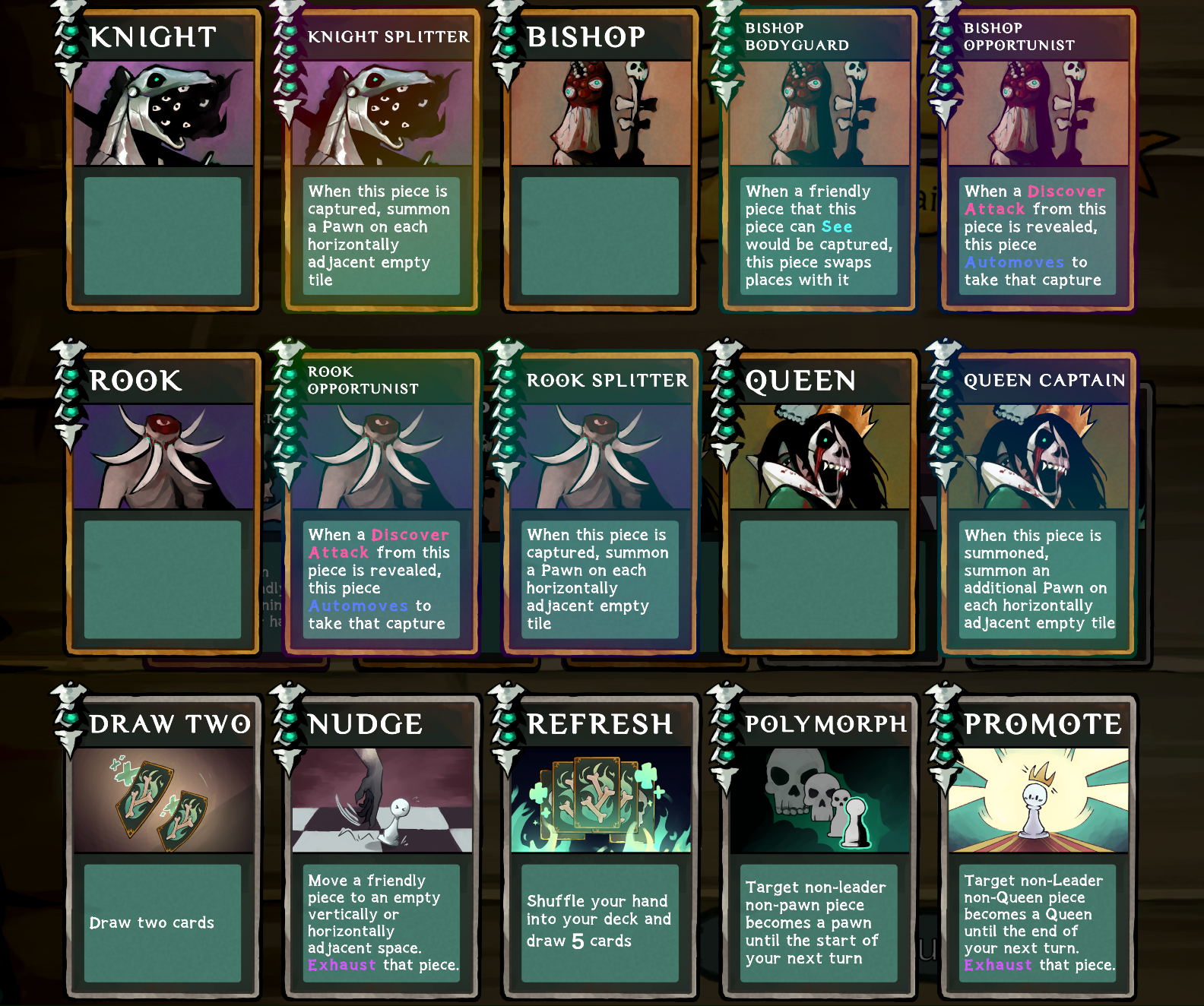
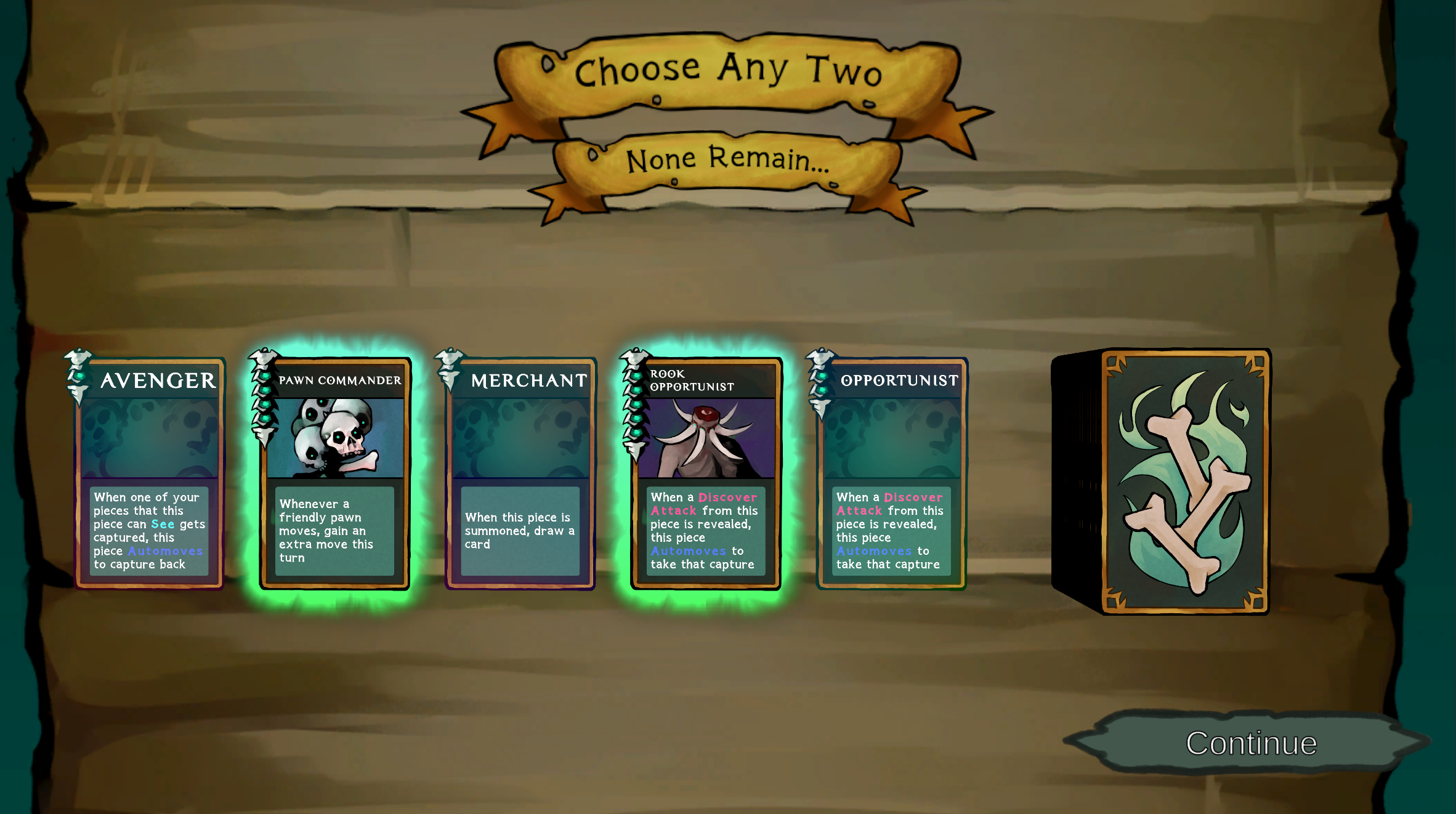
The other largest system, excluding the combat, is the reward system. Early iterations used a draft style approach, but later settled on the classic "choose your reward" system.
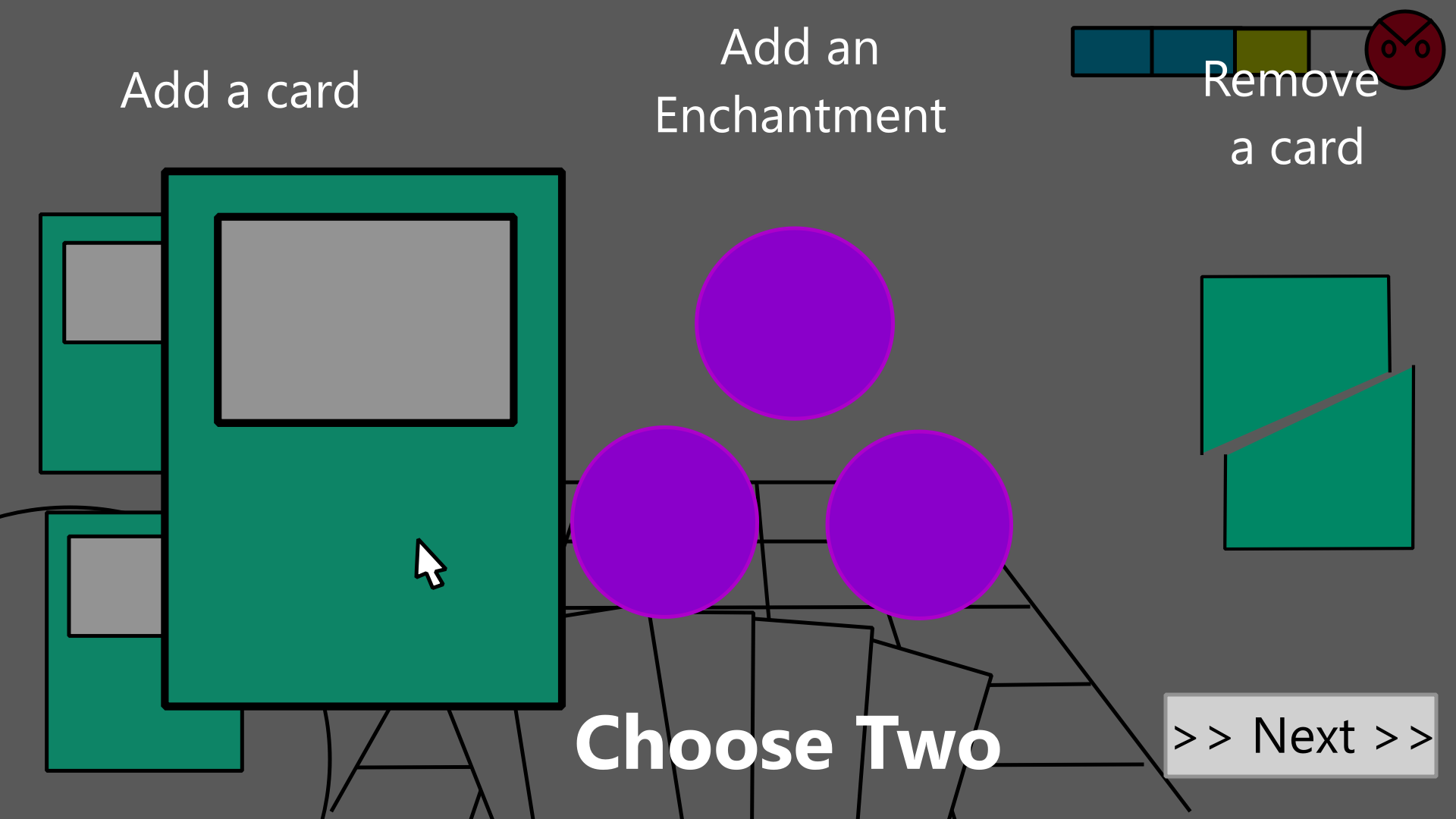
Early ierations allowed the player to choose what type of reward they wanted. However, the concept was reworked to split them into two different rewards for better pacing and balancing.
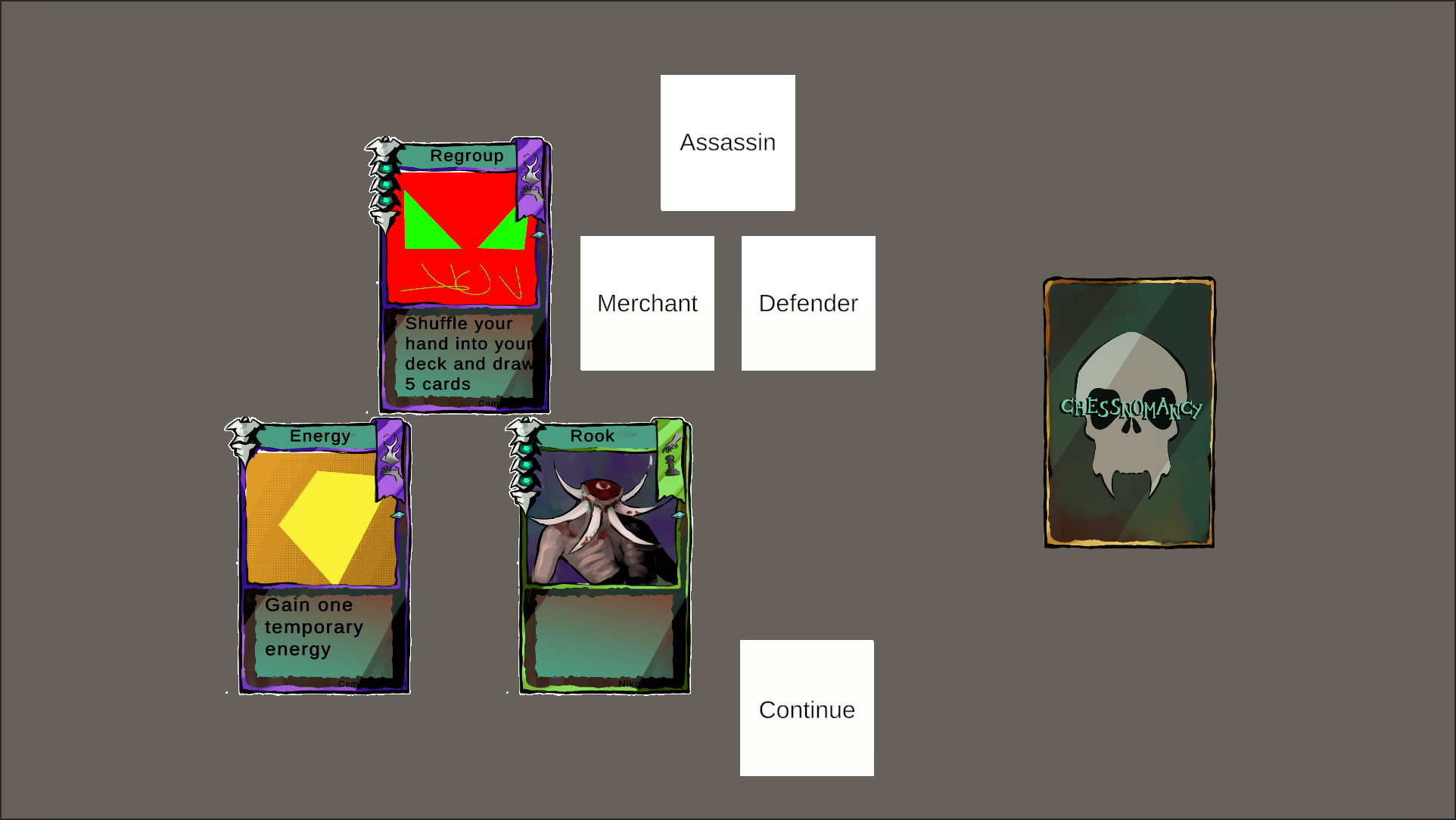
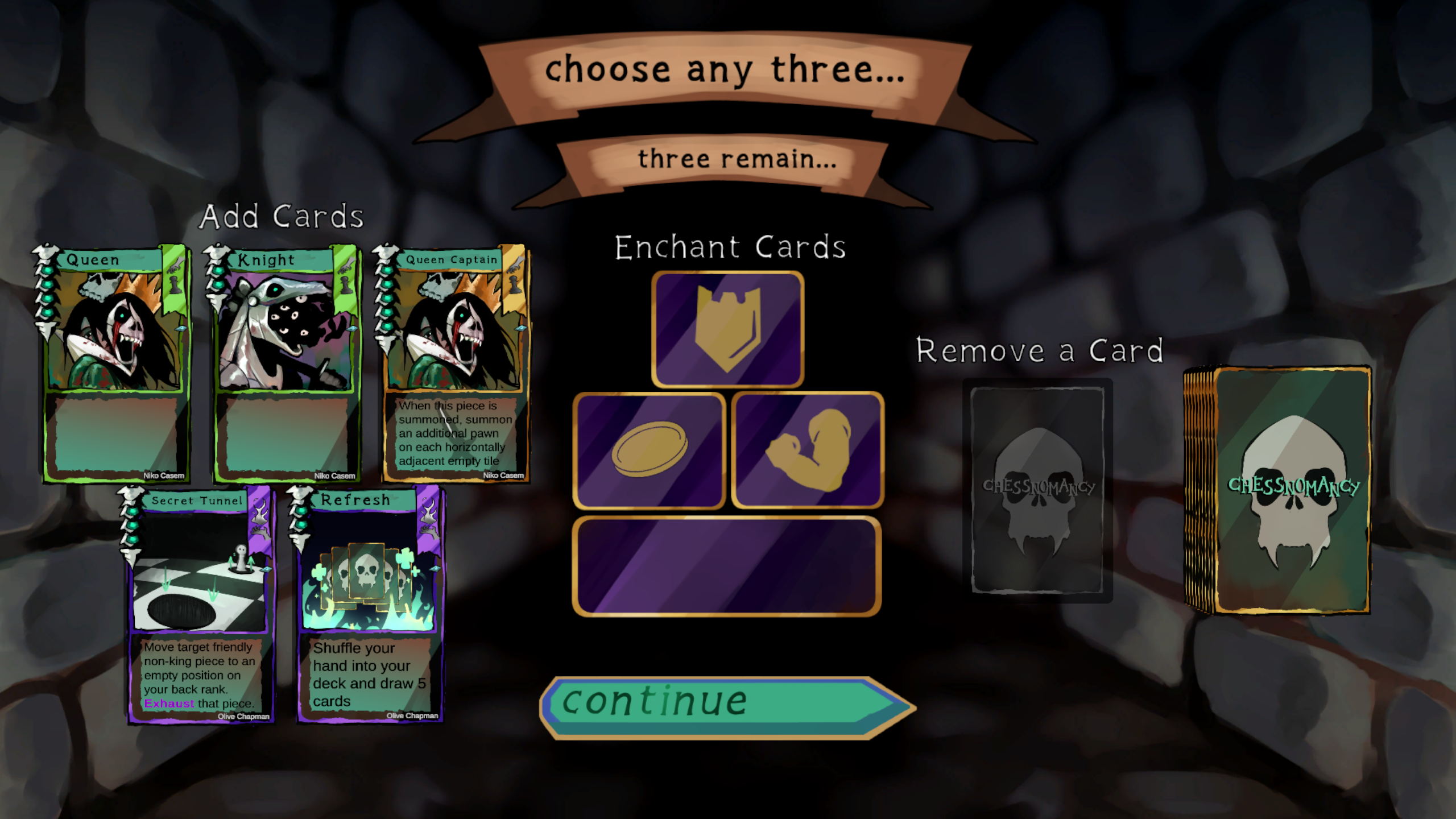
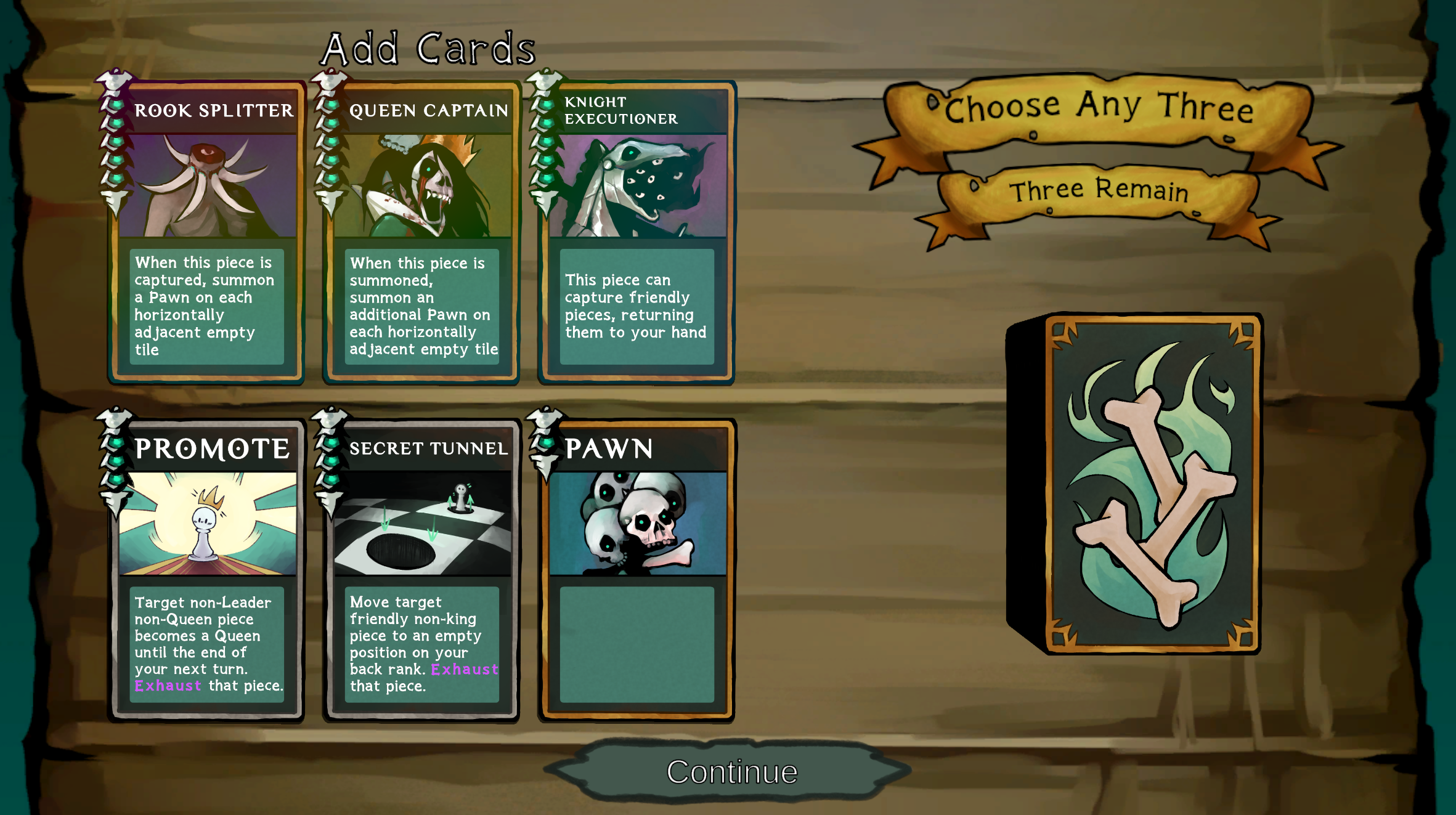
Both the default and the Chest reward variants let the player pick cards to add to their deck. To allow more freedom of choice, the player is guarenteed to have at least 1 basic unit, 1 spell, and 1 enchanted unit.
Encounter Design Work
Key Takeaways
Back to Homepage